Fire Ants in Your Yard: Why Fall Is the Best Time to Use Fire Ant Killer

Fall is one of the most effective times of year to use fire ant killer in your yard. Fire ant colonies grow all summer and peak in early fall, right when cooling temperatures push them into their heaviest foraging of the year. Broadcasting a fire ant bait as foraging ants are searching for food means it gets carried back to the colony — knocking back this year's colonies before they can rebuild and swarm again next spring.
In This Article
- What Are Fire Ants?
- What Attracts Fire Ants to Your Yard?
- When Is Fire Ant Season?
- How to Identify Fire Ant Mounds
- How to Use Fire Ant Killer in Fall
What Are Fire Ants?
Fire ants are small, aggressive ants that sting repeatedly when their mound is disturbed. The species that causes the most trouble for U.S. homeowners is the red imported fire ant, an invasive pest that arrived from South America in the 1930s and has since spread across the South and beyond.1
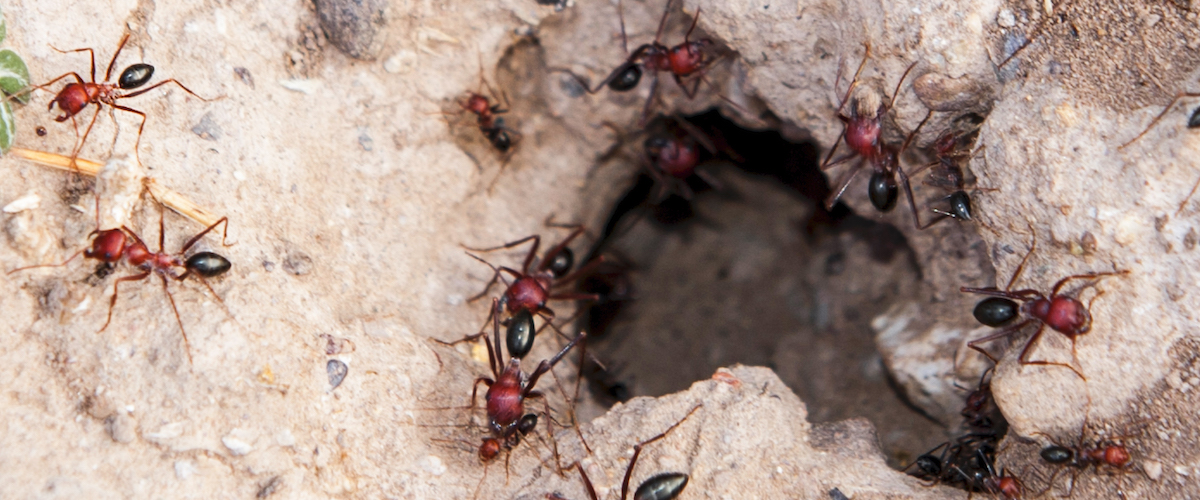
Fire ants are reddish-brown to reddish-black, with workers about 1/8 to 1/4 inch long.1 One easy identifier: worker size varies noticeably within the same colony, a trait most native ants don't share.2
A new colony starts when a mated queen falls back to the ground after a mating flight — sometimes traveling several miles on the wind — and digs a small starter chamber in the soil to begin raising a colony of her own.1 It typically takes six months to a year for that colony to grow large enough to build a mound you'd actually notice, and for every big mound in a yard, there may be a dozen or more smaller, still-hidden colonies nearby.1 For a closer look at how a colony grows and organizes underground, see our guide to understanding a fire ant colony.
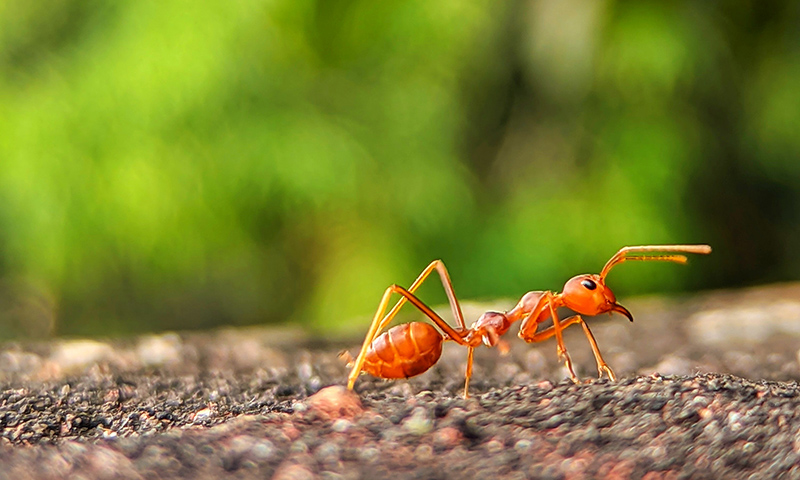
A close-up of a red imported fire ant — the reddish-brown coloring is one of the easiest ways to spot them among other yard ants.
What Attracts Fire Ants to Your Yard?
- Food. Fire ants are omnivores that feed on a wide variety of foods — insects, sweets, grease, protein, honeydew, and seeds.2 Trash cans, spilled food, and sugary drink residue left outside can quickly become a focal point of activity for foraging workers.2
- Moisture. Fire ants often nest in bare soil near a source of moisture, which makes damp, poorly drained spots in a yard easy targets.2
- Sun and open ground. Fire ants prefer open, sunny areas, and almost any sunny, grassy yard left unattended can become home to a colony.1 Bare or compacted turf, or grass mowed and edged too short, makes it even easier for them to move in.2
In short: a yard with some bare or poorly drained soil, food or trash left out, and plenty of sun is exactly the setup fire ants look for.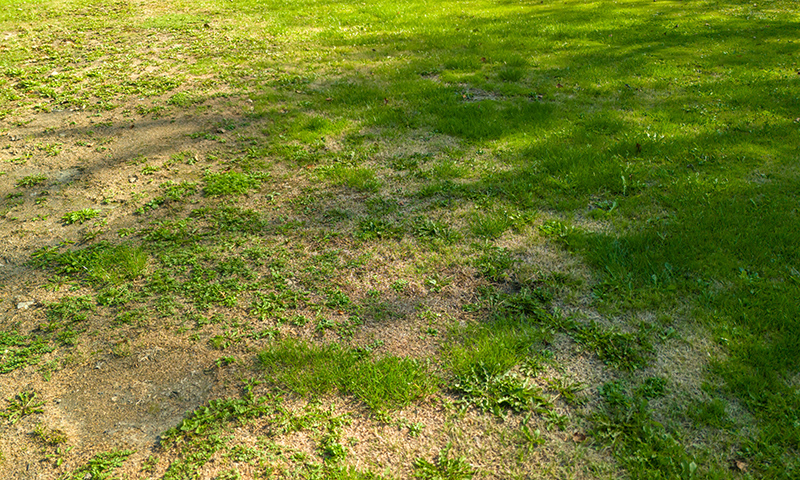
Thin, sun-baked turf and bare patches give fire ants an easy place to dig in.
When Is Fire Ant Season?
Fire ants are easiest to control in spring and fall, when temperatures put them into their heaviest foraging — and fall carries the bigger payoff, since knocking colonies back now means starting next spring with far fewer ants.3,4
Colonies are established by fall. By late summer, colonies that started with a spring mating flight have had months to grow.1 Even if you only notice a mound or two, there may be a dozen or more smaller colonies nearby that haven't built a visible mound yet.1
Foraging temperature window. Fire ant foraging slows once daytime temperatures drop below about 65°F or climb above 90°F.4 Fall's milder days tend to sit right in that range, which is exactly when ants are actively searching for food and most likely to find and carry bait back to the colony as food.4,5 To check if ants in your yard are actively foraging, set out a small amount of bait or a greasy snack like a hot dog or potato chip — if ants show up within 30 minutes, it's a good time to treat.4,5
Two treatments beat one. University extension programs recommend broadcasting bait once in spring and again in fall to control colonies before they become established, which can suppress mound numbers by up to 90% when applied correctly.3,4 Treating in fall keeps that control in place through the colder months, so you're not starting from scratch once ants ramp back up next spring.
Best window: aim for roughly late August through October, whenever daytime temperatures are still warm enough for ants to be actively foraging. Apply when the grass is dry and no rain is expected for a few days, so ants have time to carry the bait back to the mound before it washes away.4,5 That's the window to broadcast Amdro Fire Ant Killer for Lawns across your yard.

Broadcasting bait while ants are foraging heavily in fall gets it into the colony.
How to Identify Fire Ant Mounds

Some mounds are easy to spot; others stay hidden underground with no visible mound at all — which is why whole-yard bait matters as much as treating the ones you can see.
A fire ant mound looks like a dome or pile of loose, fluffy soil. There's no door on top — worker ants come and go through tunnels that radiate out from the mound and open to the surface anywhere from 5 to more than 20 feet away.5
- Look for fresh, worked soil. Mounds are made of loose dirt pushed up from below, and there's no central hole — fire ants use those underground tunnels instead of a top entrance.5
- Check the size. Most fire ant mounds show up in sunny, open areas and can reach 18 to 24 inches high when undisturbed.3
- Don't disturb it to check. Poking or kicking a mound before you treat can send workers moving the queen to safety through those side tunnels — so identify from a distance and save any disturbance for after you've applied bait.5
- Check the location. Mounds show up most in sunny, open lawn areas rather than shaded, undisturbed ground.1,3
- Watch how they react. Imported fire ants are known for aggressive swarming when their mound is disturbed — most native ants don't respond this way.3
One caution: if you're planning to bait a mound, don't disturb it first. Let ants forage naturally so they carry the bait back to the colony on their own.
How to Use Fire Ant Killer in Fall
The most effective way to control fire ants is to treat the whole colony while it's actively foraging — and fall is when that happens. Amdro Fire Ant Killer for Lawns is built to do exactly that.
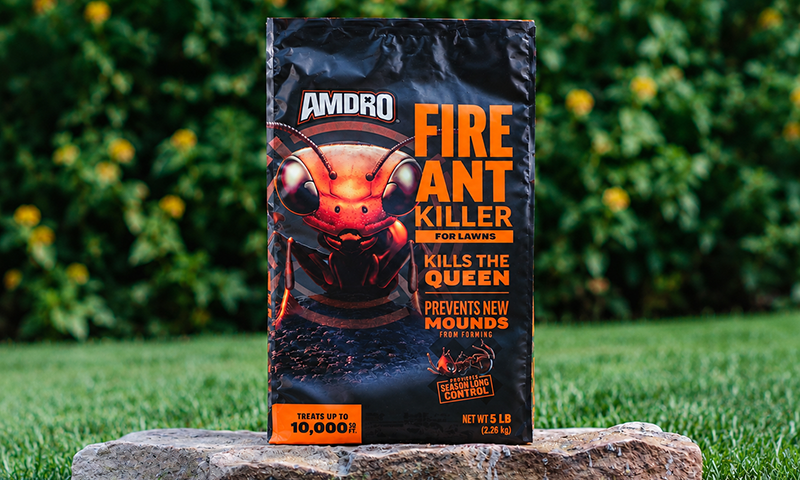
Amdro Fire Ant Killer for Lawns kills the queen and prevents new mounds from forming
How it works. This product is a fire ant killing bait combined with an insect growth regulator. Worker ants carry it into the mound as food and feed it to the queen, so she stops producing new ants. Without new ants to forage and maintain the colony, it starves — controlling the mounds you can see and helping prevent new mounds from colonies you haven't spotted yet.
Where to use it. Apply Amdro Fire Ant Killer for Lawns on lawns and landscaped areas around your home. Broadcast at 5 lb. per 5,000 sq. ft. for heavy infestations, or 5 lb. per 10,000 sq. ft. for lighter ones, using a rotary broadcast or hand-held spreader — no mixing required.
When to apply it. Tie the application to the seasonal timing above: treat in early morning or late afternoon, when ants are most active and soil temperature is above 60°F. Avoid applying when the ground is soaking wet or when heavy rain is expected, and don't water in after you apply. You can retreat up to four times a year, with at least 30 days between applications.
Fall is your opportunity to get ahead of fire ants before next spring. With colonies established and ants actively foraging in milder temperatures, it’s an ideal time to broadcast Amdro Fire Ant Killer for Lawns. Worker ants carry the bait back to the colony, helping control existing mounds and prevent new ones from forming. Treat this fall to knock back colonies before colder weather arrives and start next spring with fewer fire ants in your yard.
Always read product labels thoroughly and follow all instructions.
Amdro® is a registered trademark of Central Garden & Pet Company.
Sources
- Bonnie Coblentz, "Use Baits, Mound Treatments To Effectively Control Fire Ants," Mississippi State University Extension Service (published May 1, 2024; updated Aug. 8, 2025): extension.msstate.edu/news/feature-story/2024/use-baits-mound-treatments-effectively-control-fire-ants
- Shujuan Li, Dawn H. Gouge, Shaku Nair, Lawrence Graham, Alfred J. Fournier, and Kai Umeda, "Beware of Fire Ant Stings" (AZ1954), University of Arizona Cooperative Extension (October 2021): extension.arizona.edu/sites/extension.arizona.edu/files/pubs/az1954-2021.pdf
- University of Georgia Cooperative Extension (Lincoln County), "Spring Reminders: Fire Ants & Burweed" (published May 18, 2023): site.extension.uga.edu/lincoln/spring-reminders-fire-ants-burweed
- University of Tennessee Institute of Agriculture Extension, "Fire Ants in Your Yard? UT Extension Offers Control Recommendations" (published June 25, 2025): utianews.tennessee.edu/fire-ants-in-your-yard-ut-extension-offers-control-solutions
- Blake Layton, "Control Fire Ants in Your Yard" (Publication P2429), Mississippi State University Extension Service (POD-08-23, Aug. 2023): extension.msstate.edu/publications/control-fire-ants-your-yard
-
Frequently Asked Questions
What are fire ants?Fire ants are small, aggressive, stinging ants that build dirt mounds in lawns and open ground. The red imported fire ant is the species most U.S. homeowners deal with, and it's known for swarming and stinging repeatedly when its mound is disturbed.1 -
What attracts fire ants to my yard?Fire ants look for food, moisture, and open sunny ground. Damp soil, pet food or trash left outside, and thin, sunny turf all make a yard more inviting to them.2
-
When is the best time to treat for fire ants?Spring and fall, when temperatures put fire ants into their heaviest foraging — and fall matters most, since it knocks colonies back before winter so you start next spring with far fewer ants.3,4
-
Why is it important to use fire ant killer in fall?Because that's when foraging conditions are ideal. A fire ant killer works by tricking worker ants into carrying it back to the colony as food, and ants pick up bait fastest while they're actively foraging — which fall's milder temperatures encourage.4,5 Applying then, rather than waiting for spring, gives the bait months to work through the colony before ants swarm and spread again.
-
How can I tell if I have a fire ant mound?Look for a dome or pile of loose, fluffy soil in a sunny, open spot — fire ants use underground tunnels several feet away instead of a top entrance.3,5 Disturb it from a distance and you'll typically see aggressive swarming that most native ants don't show.3
-
How long does fire ant bait take to work?Bait is slow-acting by design. Worker ants carry it back to feed the queen, and once she stops laying, the colony gradually starves. Applying in fall — when foraging is highest — helps ants find and carry the bait faster.